A Look Back at the 2nd Edition of IN’DAYS: The End of the Life Cycle of Plastics
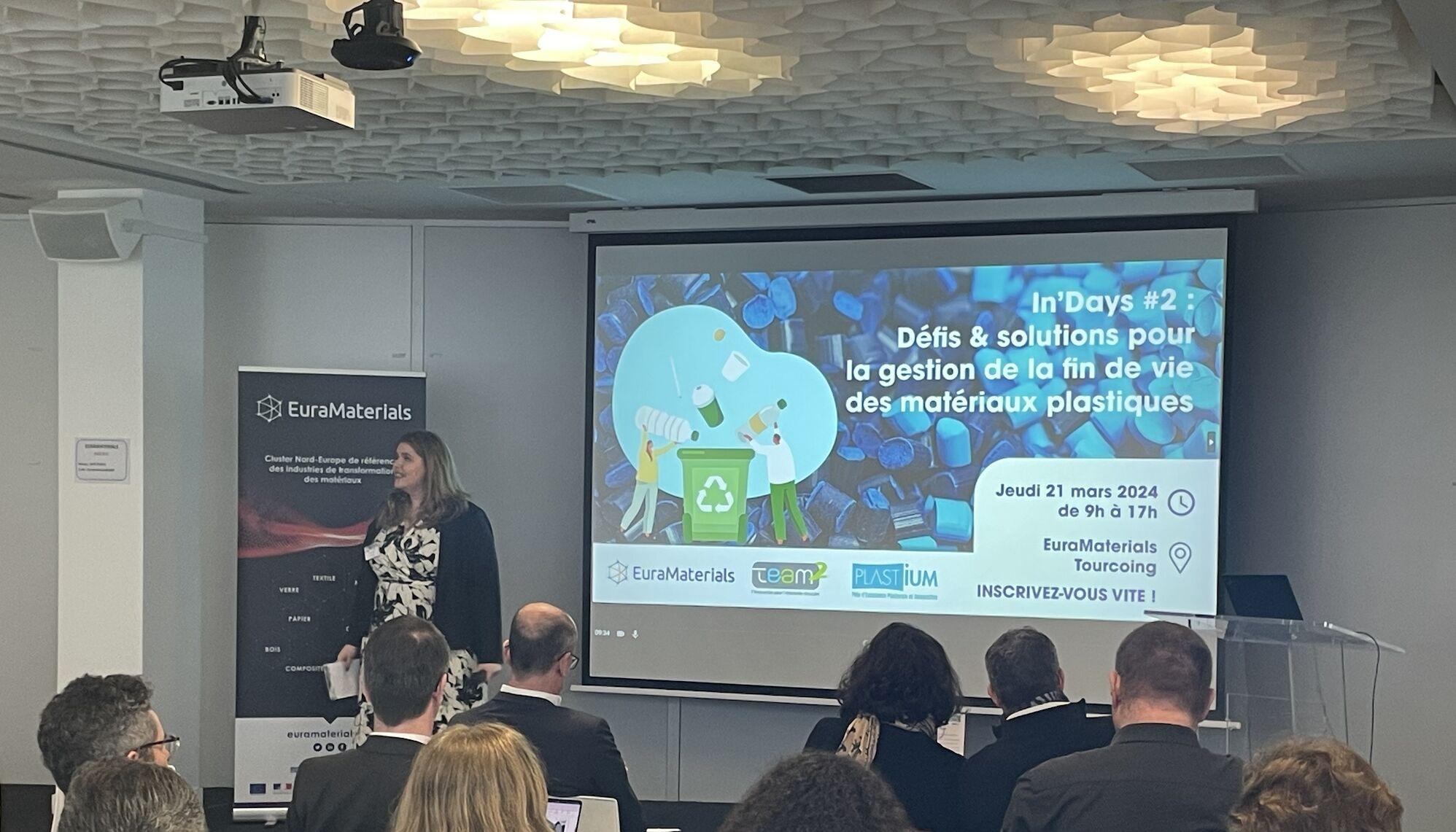
The second edition of IN’DAYS focused on the end-of-life of plastics.
This major event, organized by the EuraMaterials and TEAM² competitiveness clusters in collaboration with Plastium, the center of excellence in plastics and composites, brought together more than 50 participants and numerous expert speakers, researchers, and industry representatives to discuss challenges and innovative solutions for improving the management of end-of-life plastics.


An Introduction to the Challenges Ahead
With global annual plastic production reaching 450 million tons, millions of tons of this material reach the end of their life cycle each year, creating major environmental challenges for industry players across the value chain (manufacturing, marketing, sorting, and recycling). The day’s program was designed to address these challenges from multiple angles, proposing solutions and innovations related to various end-of-life options, particularly reuse, recycling, and composting.
Opening Lecture
Arnaud Parenty, President of Lavoisier Circular Transition, opened the day by addressingthe challenges and issues related to recycling, particularly the need to improve the technological performance of processes in order to effectively recycle products that are both complex and diverse, in light of future regulatory requirements that are becoming increasingly stringent; mandatory recycled content requirements, stringent standards regarding the potential return to food-grade use, and the necessary traceability of recycled materials…
Innovative Projects
Researchers from the ecosystem then took the floor to present trends and areas of focus within the scientific community:
Olivier DELLEA, Research Director at CEA Tech , presented vitrimers, a new class of polymeric materials offering potential for facilitating waste treatment, including post-consumer waste.
Sébastien PAUL, Director of the PTICM platform and Scientific Coordinator of the REALCAT platform, presented the Plastiloop industrial chair in partnership with Solvay and Syensqo, focusing on the recycling of certain plastics through biological depolymerization and the potential societal, environmental, and economic impacts.
Sophie DUQUESNE, Deputy Director of the UMET Laboratory, outlined the work of the University of Lille’s laboratories on various mechanical, enzymatic, and chemical recycling pathways, particularly the expertise of the POLY-REC engineering technology platform.
Finally, Yves MACHU, Director of CRITT Polymères, presented the challenges and issues surrounding recycling in the field of packaging materials, the need to take all aspects of eco-design into account, and to streamline the materials used in order to best comply with upcoming recyclability criteria under future European regulations.
Late-morning lecture, opening of the session on reuse
Florian LEFEBVRE, CEO of PLASTISEM, concluded the morning session with a presentation on the design of reusable food containers and the associated material constraints. The use of Bio PE, Tritan, and PLA was explored, with feedback on both the advantages and limitations of these materials in this context.
Continuation of the Reuse Session following the Networking Lunch
Nicolas MARTIN, R&D Project Manager at SOMMER NEEDLPUNCH, then discussedrecycling in the event flooring sector and the development of reusable tiles. He outlined the results of the comparative Life Cycle Assessment (LCA) study conducted by the company, comparing single-use products with reusable ones.
Session on the Challenges and Opportunities of Incorporating Recycled Plastics
The afternoon was devoted to the complexities and opportunities of integrating recycled plastics.
The speakers shared their visions and projects, highlighting promising innovations:
Gwendal MICHEL, Head of Market Research for Recycling & Recovery, highlighted the Ecomaison initiative to promote the integration of recycled materials into the Toys & Games sector, particularly through the creation of recycling loops, such as PP Talc derived from garden furniture, while ensuring the consistent quality of feedstocks and their regulatory compliance with the intended application and target market.
Joost SCHOLLAERT, General Manager of Galloo Plastics, then discussed the recycling of end-of-life vehicle (ELV) plastics as a source of new materials for integration into various sectors, notably the automotive and construction industries. Galloo Plastics’ expertise in matching the quality of recycled raw materials to their end uses was also highlighted.
Olivier JOLOIS, R&D Manager at Centexbel / VKC, presented an overview of innovations from the VKC competence center for the Belgian plastics industry, with a particular focus on addressing the end-of-life challenges of multilayer plastics.
Various chemical recovery technologies were discussed (solvent-based, supercritical CO2), as well as mechanical recycling and the importance of eco-design prior to manufacturing.
Finally, Hervé GUERRY, President of CYCL-ADD, addressed the topic of chemical innovation as a solution for high-performance recycled plastics, with CYCL-ADD offering additives derived from waste recycling to meet the performance requirements of regenerated plastics at controlled costs.
A roundtable discussion then brought these various experts together to discuss the challenges and opportunities involved in reintegrating recycled plastic into industrial products. These challenges stem from a market that remains heavily dependent on the price of virgin material, strict standards governing industrial products placed on the market, and the need for material traceability—all within a highly specific European regulatory framework.
The compostability of plastics
Sandra DOMENEK, Director of the CoPack Chair atAgroParisTech, discussed the work of the CoPack Chair, which focuses on the responsible co-development of the packaging sector in response to the need to reduce its environmental impact. The various projects implemented under the chair were discussed, with a particular focus on the experiment involving the real-world composting of plastic packaging; this experiment demonstrated the effective degradation of these materials in accordance with compost quality standards.
The day concluded with a presentation on support mechanisms for innovations in the field of plastic recycling, notably the ORMAT and France 2030 calls for projects.

A day filled with discussions and innovative solutions
The second edition of IN’DAYS was a success, highlighting the challenges and potential solutions for managing end-of-life plastics. The discussions and presentations helped identify sustainable and innovative opportunities, demonstrating that the end-of-life of plastics can be transformed into a new beginning for more responsible and circular practices. Nevertheless, many technological challenges remain to be addressed, and collaborative innovation remains one of the solutions to be implemented to meet these challenges.


Do you have a project?
We can help you!
Sign up for the EuraMaterials newsletter
Quarterly newsletter • Monthly calendar recap • Occasional opportunity emails
Nos partenaires & reconnaissances