RegioGreenTex: Europe is committed to the circular economy in the textile sector
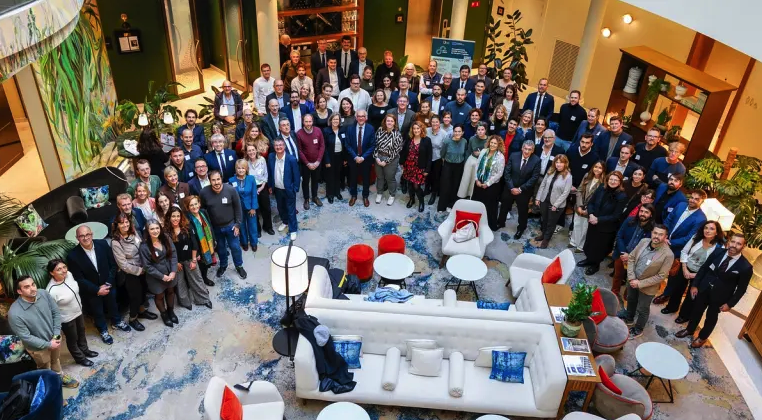
The European textile industry is undergoing a profound transformation. In response to the environmental crisis and growing expectations regarding sustainability, the European Union has launched RegioGreenTex, a program funded by the I3 instrument aimed at accelerating circular innovation in the textile sector. The goal is to reduce waste, recycle fibers on a large scale, and build new, resilient, and competitive value chains.
Supported by 43 partners across 11 regions, RegioGreenTex represents €12 million in investments aimed at bringing innovation to market, relocating certain strategic production activities, and creating green jobs. The results are already tangible, as evidenced by the scale of the 25 functional innovations that have emerged from the project
Textile de la Thiérache: High-end recycled yarns made in Hauts-de-France
Based in the heart of the region’s textile industry, Textile de la Thiérache demonstrates that recycled yarns can compete with virgin fibers. As part of RegioGreenTex, the company has carried out an ambitious pilot project aimed at incorporating recycled fibers—including cotton, wool, and linen—into the production of fine yarns for various markets: fashion, packaging, and home furnishings.
Tests conducted in 2025 confirm strong potential, particularly for recycled wool. Significant challenges remain: yarn consistency, raw material quality, and control of impurities. To address these, the company has invested in new equipment to improve yarn stability and fineness. The goal is clear: to make recycled yarns a credible and competitive alternative, while reducing dependence on virgin fibers and supporting local employment
Dumortier Carding: Tradition and Innovation in the Service of Circularity
In Tourcoing, Peignage Dumortier is applying its expertise in fiber processing to the development of new circular designs. Through RegioGreenTex, the company has optimized its processes to incorporate more recycled fibers—including cotton, wool, and synthetic fibers—into its premium ribbons.
Between January and June 2025, the company worked on:
- managing fiber heterogeneity,
- the reduction of impurities,
- fine-tuning the preparation lines,
- strengthening quality control.
The results speak for themselves: yarns that are nearly on par with “virgin fiber” standards, but with a significant reduction in environmental impact (water, energy, CO₂) and a stronger foothold in the high-end and luxury textile markets. The company is now aiming for new eco-certifications, which will ensure its future competitiveness.
Lowlands GreenTex Hub: A European Hub for Circular Textiles
A product of the RegioGreenTex initiative, the Lowlands GreenTex Hub brings together three key regions: Hauts-de-France, Flanders, and the eastern Netherlands. Its role is to establish a cross-border circular value chain capable of transforming textile waste into economic and industrial resources.
A transformative mission
The hub operates across the entire chain:
- mapping of textile waste flows,
- development of sorting and recycling solutions,
- equipment for small and medium-sized businesses,
- development of local skills,
- networking among stakeholders.
It thus provides an environment conducive to innovation, reshoring, and reducing reliance on virgin materials.
Flagship pilot projects
- Dumortier Carding (FR): Incorporating recycled fibers into premium slivers.
- Textile de la Thiérache (FR): fine yarns made from recycled cotton and wool.
- Ecoso & Quest (BE): Recycling of post-consumer textiles.
- SaXcell (NL): advanced technologies for cellulose recycling.
These initiatives illustrate the diversity of approaches, ranging from mechanical recycling to chemical recycling and circular design.
Strengthened European cooperation
RegioGreenTex is more than just a collection of regional projects. Through its five hubs—Lowlands, AURA, Italian, Portugal, and NERO—the program fosters a genuine interregional network, which is essential for sharing infrastructure, knowledge, and investments.
The results are impressive:
- 65% of innovations have led to new products or services.
- 37% have entered new markets.
- 43% of small and medium-sized businesses have reinvested in R&D, attracted by the potential of their pilot projects.
The project also highlights major breakthroughs, such as the Circular Garment—a fully recyclable garment developed through collaboration among several European SMEs—and the Waste Wizard, a digital platform that connects textile waste producers with recyclers based on AI-driven recommendations.
A momentum inspiring all of Europe
RegioGreenTex proves that the textile industry’s green transition is possible if regions cooperate, SMEs innovate, and Europe makes sustainable investments.
By bridging the gap between research and the market, supporting the move toward high-end recycling, and placing people at the heart of the sector, the project demonstrates a replicable model for the entire continent.
The path is clear: less waste, more skilled jobs, and a European textile industry ready to meet the environmental challenges of the coming decades.
Would you like more information on these topics?
Contact Jeanne MEILLIER
Photo credit: Elio Germani 2015


Do you have a project?
We can help you!
Sign up for the EuraMaterials newsletter
Quarterly newsletter • Monthly calendar recap • Occasional opportunity emails
Nos partenaires & reconnaissances