Launch of the CLARIFY LCPE Pilot Facility
Laboratory for Circular Process Engineering (LCPE), Ghent University
Kortrijk Campus, Graaf Karel de Goedelaan 46
January 29, 2026
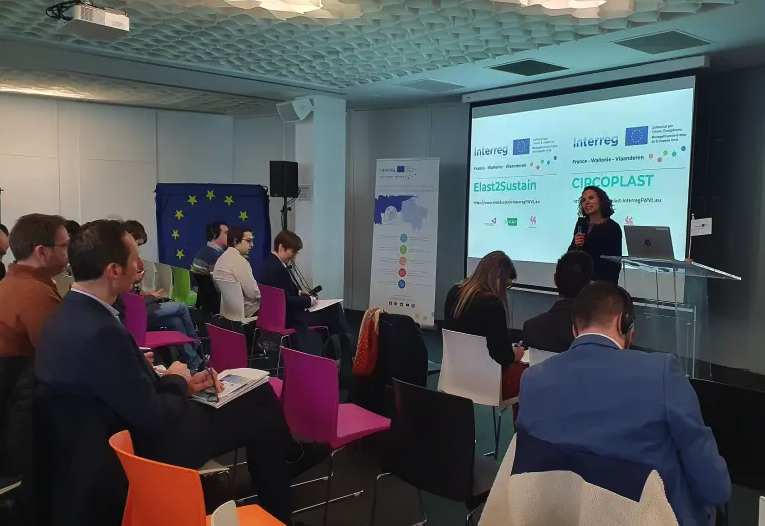
On January 29, 2026, UGent inaugurated the CLARIFY pilot facility at the Laboratory for Circular Process Engineering (LCPE). The event brought together academics, industry representatives, sector associations, and regional stakeholders around a common goal: to accelerate the transition toward a credible and industrially viable circular economy for plastics and packaging.
The event took place against a particularly challenging backdrop for the plastics and packaging sector, marked by:
- Implementation of the PPWR (Packaging and Packaging Waste Regulation)
- Changes to CEN (European Committee for Standardization) standards
- Increased pressures on EPR/REP systems
- Growing regulatory and societal pressure on circularity
2026: A Regulatory Turning Point for Packaging
Two presentations during the opening session;
- Welcome and Introduction to R-EU-CYCLE – Steven De Meester (UGent)
An institutional overview placing CLARIFY within a broader European framework. - “2026: An Annus Horribilis for Plastic Packaging Recycling. How Are Belgian EPR Systems Meeting This Challenge?” – Francis Huysman (Valipac)
A thought-provoking presentation highlighting the combined pressure of the PPWR, recycling targets, and the economic realities of EPR schemes.
This introduction established that regulatory compliance was no longer a matter of gradual adjustment, but rather of structural transformation.
Valipac’s presentation highlighted, in particular, the tensions between regulatory objectives, industrial feasibility, and the economic viability of the sectors.
Design for Recycling: Recyclability as an Upstream Constraint
Several speakers highlighted the need to incorporate circularity from the design stage:
- “Designing for Ink Recycling” – Ralf Leineweber (Siegwerk)
A focus on the impact of new ink technologies on the quality of recycled streams and the positive impact of using barrier inks instead of multilayer films. - “Packaging Design for PPWR and CEN” – Nicolas Mys (Amcor)
Translating regulatory requirements into industrial design criteria for high-barrier single-material films and the resulting environmental benefits. - “Quality of packaging waste from different collection and sorting systems” – Alexandra Schmuck (UGent)
A comparative analysis of waste streams from separate collection systems, highlighting the potential to expand recycling streams to include unsorted waste. - “Designing for Circularity in Packaging and Beyond” – Alexander Azzawi (Evonik)
Impact of using new resins such as TEGO® Res 1100 de-inking co-resin on the packaging recycling lifecycle. - “Circularity of Flexible PP Packaging” – Dominika Maruszak (PepsiCo)
An overview of the HolyGrail project and user tests of the Watermark for PP films at pilot recycling facilities.
These presentations highlight just how much recyclability has become a strategic factor and the importance of incorporating it into packaging design specifications right from the design phase.
Innovating in a challenging industrial environment
The afternoon session broadened the discussion to include macroeconomic and industrial issues:
- “Challenges and Opportunities in Sustainable Innovation in Flanders” – Peter Roose (Eastman)
Presentation of Eastman’s range of circular products: Naia (bio-based cellulose fibers), cellulose esters containing recycled content, the Solus range of bio-based additives… - “CLARIFY in the Moonshot landscape: research, pilot projects, and industrial deployment” – Tine Schaerlaekens (Catalisti)
Strategic positioning of the pilot within the Flemish innovation ecosystem. - “Physical Recycling: Where Are the Limits?” – Steven De Meester (UGent)
A key technical presentation on the inherent limitations of mechanical recycling (degradation, contamination, loss of properties) and the potential of advanced washing (particularly solvent-based) and dissolution recycling to achieve food-contact-grade quality.
It is clear that mechanical recycling alone will not be enough to meet the 2030–2040 targets.
The issue of technical limitations (polymer degradation, contamination, mechanical properties) was explicitly addressed, paving the way for the transition to the following presentations
Advanced Recycling: From Concept to Implementation
The last segment discussed the scaling up of new recycling technologies:
- “Deployment of Advanced Cleaning Technologies” – Gian De Belder (P&G) and Yannick Stanau (Lindner)
Presentation of the FlexLoop advanced recycling project (solvent cleaning). - “Physical and Chemical Recycling Approaches” – Hannah Mangold (BASF)
Examples of BASF’s advanced projects on the recycling of polymers such as PA6 using solvents (the Loopamid project) and additives to support the quality of mechanical recycling. - “Chair in Dissolution Recycling” – Laurent Bedel (Soprema)
Presentation of the Chair in Dissolution Recycling at Ghent University, with PS Loop and Soprema as industrial partners. - “Implementation of Dissolution Recycling” – Pascal Lakeman (Trinseo)
Trinseo’s dissolution technology enables the recovery of high-quality polymers from mixed or contaminated plastic streams, overcoming the limitations of traditional mechanical recycling. - “A Regional Ecosystem for Advanced Recycling” – Stefaan Verhamme (POM West Flanders)
A territorial and industrial perspective.
This development confirmed that advanced recycling had, in some cases, already reached the industrialization stage.
CLARIFY: Demonstrator and Catalyst
The day ended with:
- “The CLARIFY Pilot System and Visit” – Tobias De Somer (UGent)
- Guided tour of the laboratory and pilot site
The CLARIFY pilot system appears as:
- A bridge between academic research and industrial implementation
- A tool for evaluating the actual performance of advanced processes
- A catalyst for regional and European projects focused on advanced polymer recycling
Similar publications
Do you have a project?
We can help you!
Sign up for the EuraMaterials newsletter
Quarterly newsletter • Monthly calendar recap • Occasional opportunity emails
Nos partenaires & reconnaissances